If you have a large garden or side land, you may be wondering:
can I build a house in my garden?
The short answer is yes – in some cases. But it depends entirely on planning permission,
site layout, access, and how the proposal fits with surrounding properties.
If you are also trying to understand what that land could be worth, see our guide on
how much land is worth in Essex
,
as even a single additional plot can significantly change value.
Quick answer
You may be able to build in your garden in Essex if:
- The site has suitable access
- The proposal fits local planning policy
- There is enough space for parking and layout
- It does not negatively impact neighbouring homes
In many cases, garden developments fall under what is known as backland development,
which requires careful planning to get approved.
What counts as building in your garden?
Building in your garden usually means creating a new, separate dwelling within land that currently forms part of an existing residential property.
This could include:
- A new house at the rear of your property
- A dwelling on side land
- Splitting an existing large plot into two
These types of schemes are often referred to as backland or infill developments.
Do you need planning permission?
Yes – in almost all cases, you will need full planning permission to build a separate dwelling in your garden.
Permitted development rights do not usually allow for the creation of a new standalone house.
This means your proposal will be assessed by the local council based on design, layout, access and impact.
Key factors that determine if you can build
1. Access
Access is often the biggest constraint. Without safe and suitable access, most schemes will not be approved.
2. Space and layout
There needs to be enough space for the house, parking, turning areas and separation distances.
3. Impact on neighbours
Councils will assess overlooking, privacy, noise and general impact on surrounding properties.
4. Local planning policy
Some areas are more supportive of infill and backland development than others.
5. Character of the area
If your proposal looks out of keeping with surrounding properties, it may be refused.
How many houses could fit in a garden?
Most garden developments involve one additional dwelling, but larger plots may support more.
If you’re trying to understand capacity, see:
how many houses you can build on an acre in Essex
.
This gives a broader view of how density works across different types of land.
Reality check
Many garden plots look large enough for development, but access and layout constraints often reduce what is achievable.
Why some garden developments get refused
- Poor or unsafe access
- Overdevelopment of the site
- Loss of privacy to neighbours
- Out-of-character design
- Insufficient parking
These are the most common reasons planning applications fail.
Is it worth doing?
In many cases, yes.
Even a single additional plot can significantly increase the value of your property.
If you are considering selling rather than building, see:
how to sell land in Essex
.
Want to know if your garden has potential?
We provide a free initial review for landowners across Essex.
- Planning likelihood
- Access constraints
- Development potential
- Indicative land value
Call 0800 612 2100 or submit your site for review.
Final thought
So, can you build in your garden in Essex?
In many cases, yes – but it depends on the specifics of your site.
The key is understanding what is realistically achievable before making assumptions.
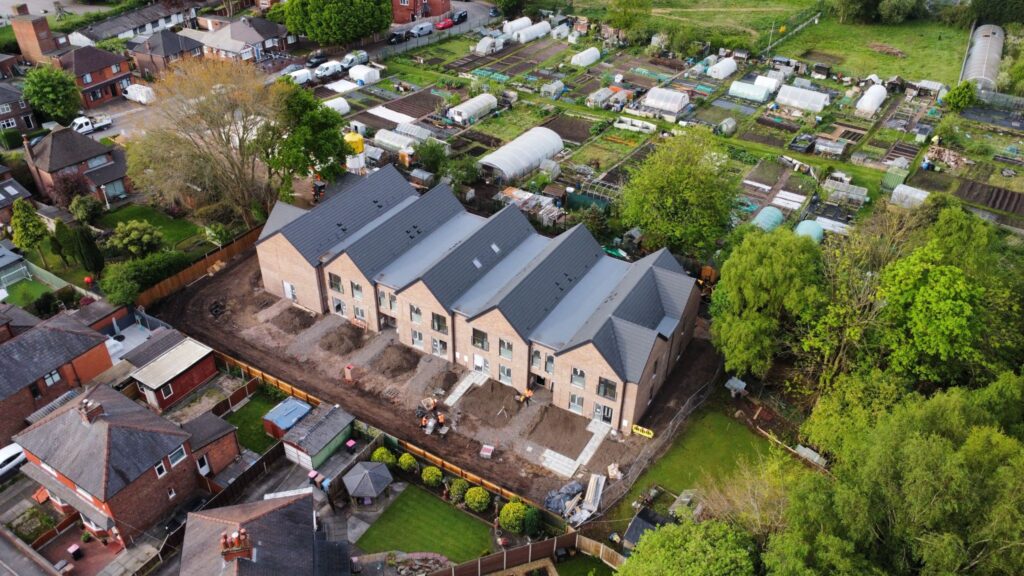
The image below shows a typical example of a garden in Essex that may have development potential, depending on access, layout and planning policy.