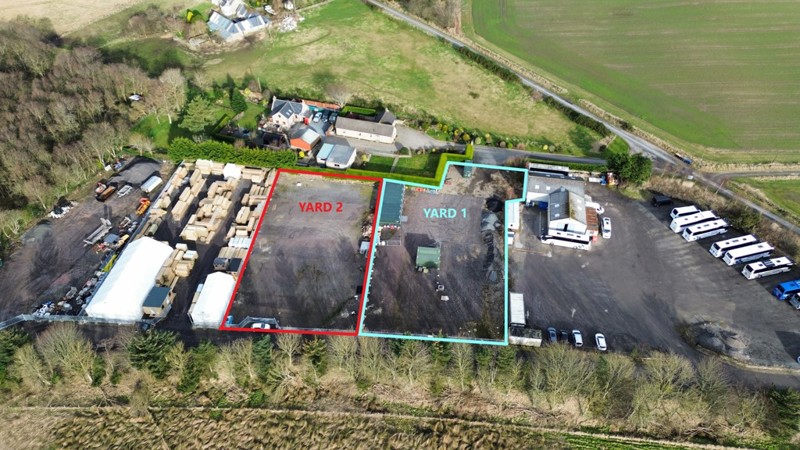
Quick answer:Open storage land in Essex is often undervalued because planning status, lawful use and future flexibility are not properly understood. Yard owners in areas such as Colchester and Chelmsford can improve outcomes by clarifying planning risk and value before deciding whether to sell, promote or retain their land.
Planning-Led Advice on the Value, Risk and Sale Options for Industrial Yards and Open Storage Land in Essex
Across Essex, demand for industrial open storage land has increased sharply over recent years. Contractors, utilities firms, infrastructure operators and logistics businesses all require secure, accessible yard space – particularly close to towns rather than remote industrial estates.
As a result, many landowners in Colchester, Chelmsford and surrounding areas are sitting on assets that are far more valuable than they realise.
However, the way many owners approach these sites – often going straight to an agent – can result in missed value, unnecessary risk, or a sale that happens far too early.
This article explains how open storage land is viewed from a planning and value-creation perspective, and what owners should consider before making any decisions.
What Counts as “Open Storage Land”?
Open storage land is broader than many people think. In practice, it often includes:
- Builder’s yards and contractor depots
- Plant, scaffold, materials or machinery storage
- Former agricultural yards now used commercially
- Redundant commercial land used informally for storage
- Mixed-use sites with hardstanding, containers or compounds
In Essex, many of these sites have evolved gradually over time. What started as incidental or temporary use can quietly become long-established commercial activity – sometimes without the paperwork ever catching up.
That gap between use on the ground and planning status is where both risk and opportunity sit.
The Planning Reality: Lawful Use vs Tolerated Use
A critical issue for open storage land is whether the use is:
- Lawful – supported by planning permission or a Certificate of Lawfulness, or
- Tolerated – known to the council but not formally regularised
Many yards operate in the second category.
This can work for years until something changes. Common triggers include:
- A sale or refinancing
- A change in operator or intensification of use
- A neighbour complaint
- An agent marketing the site too openly
At that point, uncertainty becomes a pricing problem. Buyers, lenders and tenants discount risk aggressively.
By contrast, land with clear, documented planning status attracts stronger interest and better terms.
Essex Is Not One Market: Colchester vs Chelmsford
While both towns sit in Essex, the planning dynamics are different.
Colchester
- Strong pressure on employment and service land
- Edge-of-town yards often outperform expectations
- Opportunities for intensification, hybrid commercial uses and longer-term redevelopment potential
Well-located yards near Colchester frequently hold strategic value beyond their current income.
Chelmsford
- Tighter policy control and higher sensitivity
- Greater scrutiny around highways, noise and neighbouring uses
- Scarcity of compliant sites increases the value of certainty
In Chelmsford, planning clarity often matters more than scale.
The Common Mistake: Going Straight to an Agent
Agents play an important role — but they typically market what exists today.
They rarely:
- Resolve planning uncertainty first
- Secure lawful use or certificates
- Structure promotion or phased value creation
As a result, sites are often priced on a “best guess” basis, with risk baked in against the seller.
From a value perspective, planning clarity nearly always comes before marketing.
How Open Storage Land Is Typically Valued in Essex
Owners researching whether to sell often assume that open storage land is valued purely on its current income or by comparing nearby yard transactions.
In reality, value is driven by a combination of:
- Location and proximity to towns or arterial routes
- Size, layout and quality of hardstanding
- Access, visibility and operational constraints
- Planning status and lawful use certainty
- Future intensification or alternative use potential
Two sites generating similar income can carry very different values depending on planning risk and long-term flexibility.
This is why owners considering a sale often benefit from understanding planning-adjusted value, rather than relying on headline yields alone.
Three Routes Open Storage Owners Should Consider
1. Secure Planning Clarity First
This may include confirming lawful use, defining the correct use class or formalising long-established activity. This approach reduces risk and strengthens negotiating position.
2. Promotion or Joint-Venture
For owners who do not want to sell outright, a specialist partner can take planning risk while the owner retains long-term upside through a shared value-creation approach.
3. Quiet, Off-Market Sale
In some cases, speed, discretion and certainty matter more than headline price. A direct, informed approach can outperform a public listing.
When an Off-Market Conversation Makes Sense
We typically see the best outcomes where:
- The yard is owner-occupied
- The land has been held for many years
- The owner is approaching retirement or succession
- Compliance and uncertainty have become a burden
These are not distressed situations — just moments where clarity creates options.
A Final Thought for Essex Yard Owners
Open storage land is no longer a secondary asset class. In the right locations, it is becoming strategically important.
Before selling, leasing or marketing a yard in Colchester, Chelmsford or wider Essex, it is worth understanding:
- What the land is today in planning terms
- What it could become with the right approach
- Whether selling now is actually the best option
If you own open storage land or a commercial yard in Essex and want a clear, planning-led view of its position and potential before deciding what to do next, a quiet appraisal can often unlock better decisions – without pressure or obligation.