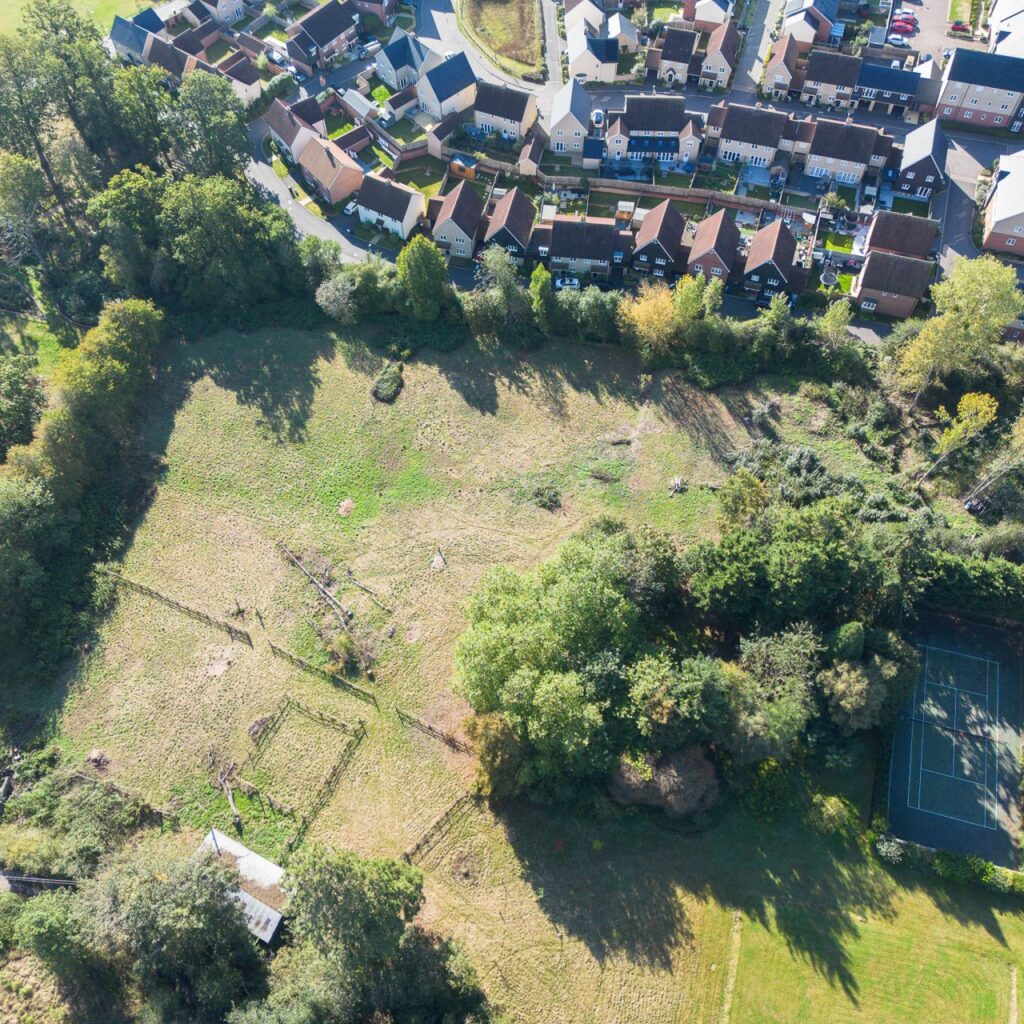
Land value is not fixed – it is driven by development potential.
Two similar pieces of land can have completely different values depending on what can be built on them.
- Land with no planning → lower value
- Land with potential → higher value
- Land with planning → significantly higher value
The difference is what the land can become.
If you’re looking at this in relation to your own land, you can call 0800 6122100 or enter your postcode in the form on this page.
What determines land value in the UK?
Land value varies widely depending on several factors, but most of them come back to one core question:
“What can actually be built here?”
The main influences include:
- location and demand
- planning policy
- access and infrastructure
- site layout and usability
- nearby development
In areas like Essex and the South East, land often carries higher value due to stronger demand and development pressure.
The role of planning permission
Planning permission is the single biggest factor affecting land value.
Without it, land is usually valued based on its current use.
With it, land is valued based on what it could become.
For example:
- Land without planning → £10,000 – £50,000
- Land with planning → £200,000+
Same land. Different outcome.
To explore this further:
How much is land worth without planning permission?
How developers assess land value
Developers typically use a residual valuation approach.
This works backwards from the final value of a development.
Simple example
- Completed house value: £500,000
- Build costs: £200,000
- Fees and profit: £100,000
Remaining = £200,000 land value
This is why planning potential has such a dramatic impact.
How many houses can be built on land?
A common question is how many houses a site can support.
Typical density ranges:
- Low density: 5–10 homes per acre
- Average: 10–20 homes per acre
- Higher density: 20+ homes per acre
However, every site is different.
See how many houses per acre in the UK
How this applies to your land
If you own land or a large garden, the more relevant question is not “what is land worth in general” — it is:
“What could this specific site realistically be used for?”
Start here:
Selling land vs developing it
Once you understand the potential, the next decision is what to do with it.
Sell as-is
- Faster
- Lower risk
- Lower value
Secure planning first
- Higher value
- Longer timeline
Use a planning-led agreement
- Shared uplift
- No upfront cost in many cases
There is no single right answer – it depends on the site and your goals.
Looking at this in relation to your own land?
If you’re researching land value because you own land, it may be worth understanding what could realistically be possible.
- Whether development is achievable
- What the land could be worth
- The best route forward
Enter your postcode in the form on this page or call 0800 6122100.
Frequently asked questions
What determines land value in the UK?
Primarily development potential, planning permission, location and access.
Does planning permission increase land value?
Yes — often significantly, as it reduces risk and enables development.
How many houses can be built on an acre?
Typically between 10 and 20, depending on planning and layout.
Is land value based on size?
No — size matters, but planning potential is usually more important.
Final thought
Land value is not about what it is today.
It is about what it could become.